
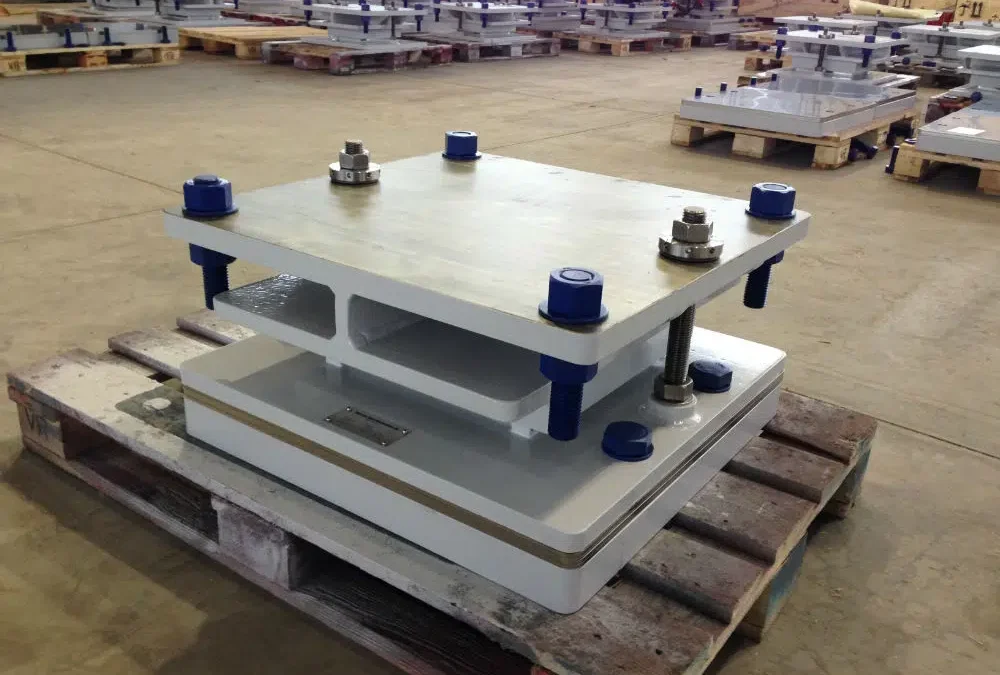
Modern buildings and industrial facilities rely on increasingly sophisticated mechanical equipment, from HVAC systems and medical imaging devices to manufacturing machinery and marine propulsion systems. While these systems improve productivity and operational efficiency, they also generate vibration and shock that can affect structural performance, occupant comfort, equipment reliability, and long-term maintenance costs. Standard isolation products may address common installation scenarios, but many projects involve unique operating conditions that require engineered solutions rather than off-the-shelf components.
Custom isolators are designed to address these application-specific challenges by matching the isolation system to the equipment’s operating characteristics, installation constraints, environmental conditions, and project requirements. Whether supporting rotating equipment in a commercial mechanical room, protecting precision instruments in a laboratory, or isolating heavy machinery in an industrial facility, properly engineered vibration isolation helps minimize vibration transmission while maintaining equipment stability and structural integrity.
Designing an effective custom isolation solution requires more than selecting a spring or rubber mount from a catalog. Engineers must evaluate equipment weight, center of gravity, operating speed, excitation frequencies, dynamic loads, structural support conditions, corrosion exposure, maintenance accessibility, and applicable building codes. These considerations often influence the geometry, materials, mounting configuration, and fabrication methods used to produce a reliable isolation system.
The Sigma Source provides custom vibration isolation solutions supported by structural engineering expertise, custom metal fabrication, and advanced manufacturing capabilities. Serving commercial, industrial, healthcare, infrastructure, aerospace, and marine markets throughout the United States, the company develops engineered isolation systems that integrate seamlessly into new construction, equipment upgrades, and retrofit projects. By combining engineering analysis, BIM modeling, fabrication, and quality manufacturing, The Sigma Source helps engineers, contractors, and facility owners solve complex vibration challenges while supporting compliance with applicable industry standards and project specifications.
What Are Custom Isolators?
Custom isolators are engineered vibration control devices specifically designed to meet the operational and structural requirements of a particular piece of equipment or facility. Unlike standard catalog products that are manufactured around common load ranges and mounting dimensions, custom isolators are developed after evaluating the equipment’s dynamic behavior, environmental conditions, installation constraints, and long-term performance objectives.
The primary purpose of a custom vibration isolator is to reduce the transmission of mechanical vibration between equipment and its supporting structure. By interrupting this transfer of energy, properly designed isolation systems help protect both the equipment and the surrounding building from excessive vibration, noise, and dynamic loading.
Custom isolators may incorporate spring elements, elastomeric materials, wire rope assemblies, rubber-metal bonded components, or combinations of these technologies depending on the application. In many installations, engineers also integrate mounting brackets, structural frames, inertia bases, flexible connectors, or fabricated steel assemblies to create a complete vibration isolation system rather than simply supplying an individual isolator.
How Custom Isolators Differ from Standard Catalog Products
Standard isolators are appropriate for many routine mechanical installations where equipment characteristics fall within predictable operating ranges. However, commercial and industrial projects frequently present conditions that exceed these assumptions.
Examples include:
- Equipment with unusual weight distribution
- Non-standard mounting footprints
- High dynamic loads
- Continuous vibration exposure
- Corrosive or marine environments
- Limited installation space
- Seismic design requirements
- OEM equipment requiring integrated mounting solutions
In these situations, selecting a standard isolator can result in insufficient isolation performance, premature wear, excessive deflection, or maintenance challenges. A custom solution allows engineers to optimize isolator stiffness, damping characteristics, mounting geometry, material selection, and fabrication details specifically for the intended operating environment.
Because every application behaves differently, engineering analysis becomes a critical component of the design process. Load calculations, vibration measurements, and dynamic analysis provide the information needed to develop an isolation system that performs predictably throughout the equipment’s service life.
Why Engineered Vibration Isolation Matters
Mechanical vibration is often more than a comfort issue. Excessive vibration can shorten bearing life, loosen fasteners, fatigue welded connections, damage sensitive electronics, and increase maintenance requirements. In healthcare facilities, vibration may interfere with imaging equipment or laboratory instruments. In manufacturing plants, vibration can reduce machining accuracy and product quality. Within office buildings and mixed-use developments, vibration generated by HVAC equipment may create occupant complaints despite the equipment operating within acceptable mechanical limits.
Properly engineered custom isolators reduce vibration transmissibility by controlling the relationship between equipment excitation frequency and the natural frequency of the isolation system. Achieving this balance helps prevent resonance while improving equipment stability and extending operational life.
For engineers responsible for mission-critical facilities such as hospitals, data centers, research laboratories, or semiconductor manufacturing plants, vibration isolation is often considered during the earliest stages of project design rather than after operational problems appear. Integrating custom isolators into the overall structural and mechanical design supports better system performance while reducing costly modifications later in the project lifecycle.
When Does Equipment Require a Custom Vibration Isolator?
Not every mechanical installation requires a custom-engineered isolation system. However, as equipment becomes larger, more specialized, or more sensitive to vibration, standard mounting products may no longer provide the performance necessary to satisfy operational and project requirements.
Many commercial and industrial projects involve equipment with unique loading conditions, challenging installation environments, or strict performance specifications that justify a custom approach. Early engineering evaluation can help identify these situations before installation begins, reducing the likelihood of vibration problems, costly redesigns, or operational disruptions after commissioning.
Unique Loading Conditions
Equipment rarely distributes weight evenly across its mounting points. Pumps, chillers, generators, compressors, and manufacturing equipment often have off-center components that shift the center of gravity away from the geometric center of the equipment.
Uneven load distribution can overload individual isolators, causing excessive deflection, instability, or reduced isolation efficiency. Custom isolators allow engineers to vary stiffness and load capacity at different support locations, maintaining proper equipment alignment while improving overall system performance.
Applications involving dynamic machinery, reciprocating equipment, or rotating systems also introduce variable loads that change during operation. Accounting for these changing forces helps prevent excessive movement and structural fatigue over time.
Limited Installation Space
Mechanical rooms, rooftop equipment platforms, retrofit projects, and industrial production lines frequently provide limited space for installing standard isolation products. Existing piping, ductwork, electrical systems, and structural framing may restrict available mounting locations or equipment height.
Custom isolators can be designed with modified dimensions, specialized brackets, fabricated support frames, or integrated mounting assemblies that accommodate these physical constraints without compromising vibration performance.
This flexibility is particularly valuable during renovation projects where engineers must integrate new mechanical equipment into existing buildings while minimizing structural modifications.
Extreme Environments
Operating conditions significantly influence isolator selection. Marine applications expose equipment to saltwater corrosion, continuous vibration, and shock loading. Industrial processing facilities may involve elevated temperatures, chemical exposure, moisture, oils, or abrasive contaminants. Outdoor installations must withstand ultraviolet radiation, weather cycles, and temperature fluctuations.
Selecting appropriate elastomer compounds, stainless steel components, corrosion-resistant coatings, galvanized finishes, or specialized alloys improves long-term durability while reducing maintenance requirements.
Material selection is therefore not simply a manufacturing decision but an important engineering consideration that directly affects service life and reliability.
Critical Vibration Performance Requirements
Certain facilities require exceptionally low vibration levels to protect equipment performance or maintain operational precision.
Examples include:
- Hospitals operating MRI and CT imaging systems
- Research laboratories
- Semiconductor manufacturing facilities
- Precision machining centers
- Aerospace manufacturing
- Data centers
- Pharmaceutical production
- High-technology manufacturing
These environments often require engineers to analyze operating frequencies, vibration transmissibility, resonance behavior, and structural response before selecting an isolation strategy.
Projects located in regions with significant seismic activity may also require coordination between vibration isolation and seismic restraint systems. Equipment must remain operational during normal service while maintaining compliance with applicable seismic provisions contained within the International Building Code (IBC), California Building Code (CBC), and ASCE 7.
Because these requirements affect both equipment performance and life safety, engineers frequently develop integrated vibration and seismic solutions rather than treating the two systems independently.
Types of Custom Isolators
Custom vibration isolation solutions are available in several configurations, each designed to address specific equipment characteristics, environmental conditions, and performance objectives. Rather than relying on a single technology, engineers evaluate how different isolation mechanisms respond to vibration frequencies, shock loads, operating environments, and structural support conditions before selecting the most appropriate solution.
The following isolator types are commonly incorporated into engineered vibration control systems across commercial, industrial, marine, healthcare, and manufacturing applications.
Custom Spring Isolators
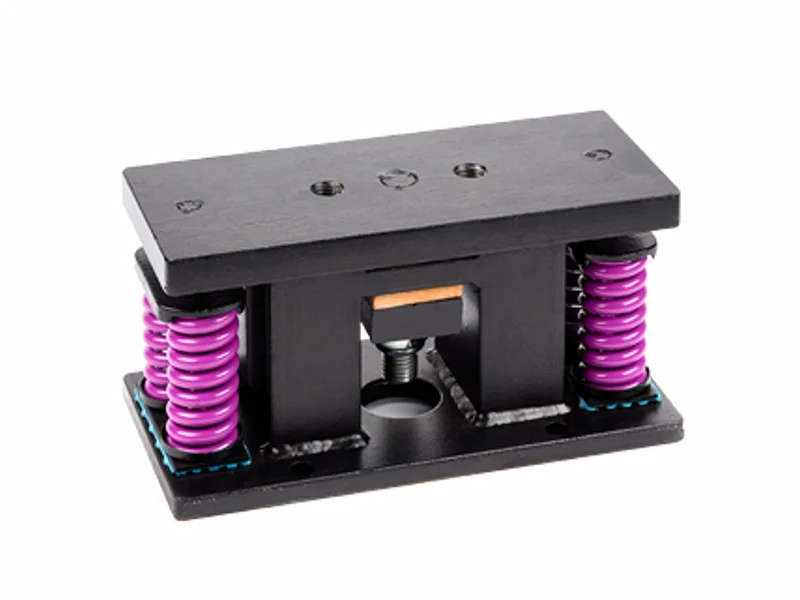
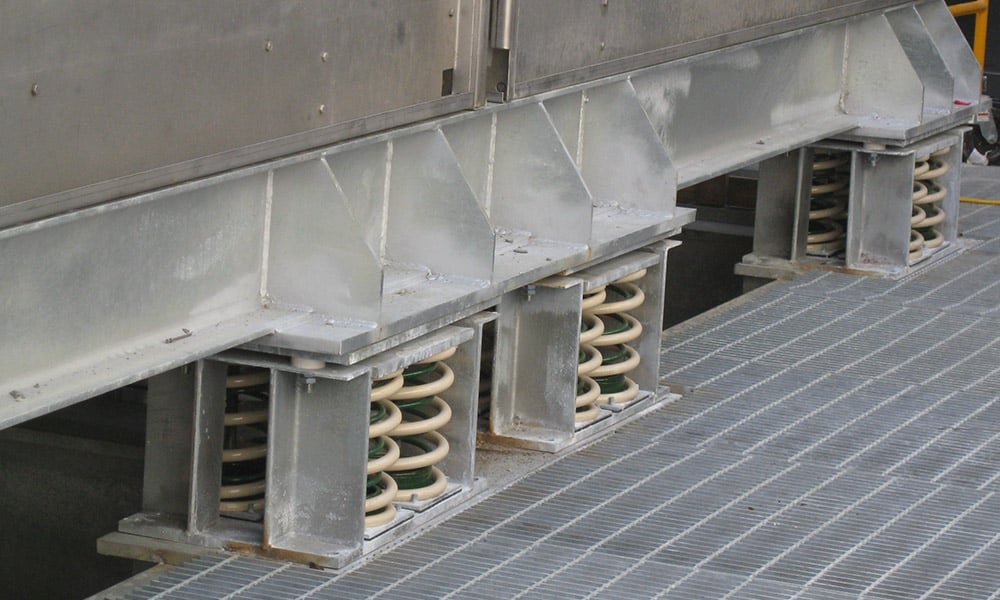
Spring isolators remain one of the most effective solutions for controlling low-frequency vibration generated by HVAC equipment, chillers, cooling towers, air handling units, pumps, and generators. Steel springs provide excellent static deflection, allowing the isolation system to achieve lower natural frequencies and higher isolation efficiency than many elastomer-based alternatives.
Custom spring isolators may include restrained housings, adjustable leveling mechanisms, corrosion-resistant finishes, inertia bases, or fabricated steel supports to meet project-specific requirements.
Custom Wire Rope Isolators
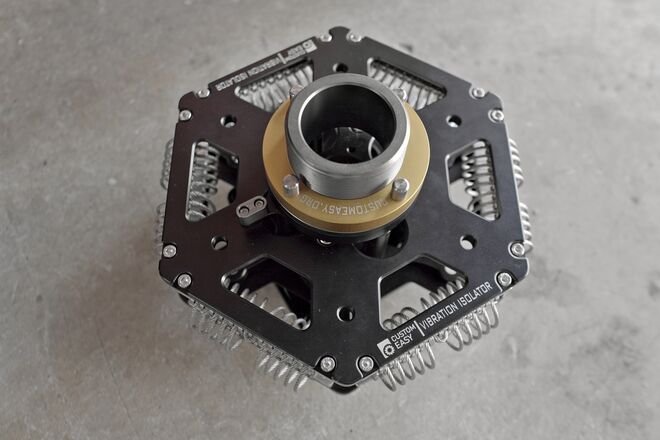
Wire rope isolators use stainless steel cable woven through metal retaining bars to provide multidirectional vibration and shock isolation. Their ability to perform in harsh environments makes them particularly suitable for aerospace, marine, defense, transportation, and offshore equipment.
Unlike conventional rubber components, wire rope isolators resist corrosion, ultraviolet exposure, oils, fuels, and temperature extremes while maintaining consistent mechanical performance over extended service lives.
Because they can absorb both vibration and impact loading, they are frequently specified where equipment experiences repeated shock events or unpredictable operating conditions.
Custom Elastomeric Isolators
Elastomeric isolators combine flexibility, damping, and compact design, making them suitable for a broad range of commercial and industrial equipment. Engineers select elastomer compounds based on load capacity, environmental exposure, operating temperature, and chemical compatibility.
Common materials include neoprene, EPDM, natural rubber, silicone, nitrile, and polyurethane, each offering distinct performance characteristics depending on the application.
Custom molded geometries further allow stiffness and damping properties to be optimized for specific operating conditions.
Rubber-Metal Bonded Isolators, Captive Mounts, Marine Mounts, and Equipment Isolation Assemblies
Many applications require bonded rubber-metal isolators that combine elastomeric damping with the structural strength of steel components. Captive isolators provide additional safety by mechanically retaining equipment during unusual loading events, while marine engine mounts accommodate continuous vibration and dynamic propulsion loads in corrosive environments.
For larger industrial installations, engineers often design complete equipment isolation assemblies incorporating structural steel frames, mounting brackets, inertia bases, anchor systems, and custom fabricated supports. These integrated solutions simplify installation while ensuring the isolation system functions as a coordinated mechanical assembly rather than a collection of individual components.
Read more: How to Choose Vibration Isolators
Engineering Factors Used to Design Custom Isolators
Designing a custom vibration isolator requires a comprehensive engineering evaluation rather than simply selecting a component based on equipment weight. Every mechanical system produces vibration differently depending on its operating characteristics, support conditions, installation environment, and intended service life. The goal of an engineered isolation solution is to reduce vibration transmission while maintaining equipment stability, structural integrity, and long-term reliability.
At The Sigma Source, the design process begins by evaluating the complete operating environment rather than focusing solely on the isolator itself. Mechanical engineers review equipment specifications, structural support conditions, expected operating frequencies, dynamic loading, maintenance access, environmental exposure, and project requirements to determine the most appropriate isolation strategy. This engineering-first approach helps ensure the finished system performs as intended throughout the life of the equipment.
Equipment Weight
Static equipment weight establishes the baseline loading for every isolation system. However, engineering calculations extend beyond total weight to evaluate how that load is distributed across individual mounting locations.
Mechanical equipment such as pumps, compressors, generators, chillers, and air handling units often have uneven weight distribution caused by motors, compressors, piping connections, or internal rotating assemblies. If load distribution is not properly evaluated, one isolator may become overloaded while others remain underutilized, reducing isolation performance and increasing wear.
Engineers calculate the expected load at each support point to select isolators with appropriate spring rates or elastomer stiffness, ensuring balanced support across the entire assembly.
Center of Gravity
The location of an equipment’s center of gravity significantly influences vibration behavior and structural stability.
Equipment with elevated or offset centers of gravity experiences greater overturning moments during operation. Large rooftop HVAC units, industrial process equipment, marine engines, and skid-mounted machinery frequently require customized mounting arrangements that compensate for these forces.
By analyzing center-of-gravity location, engineers can modify isolator spacing, mounting geometry, or structural support frames to improve stability while maintaining effective vibration isolation.
Operating Frequency
Every rotating machine generates excitation frequencies based on motor speed, shaft rotation, or reciprocating motion.
Common examples include HVAC fans, cooling towers, pumps, compressors, centrifugal equipment, industrial production machinery, and marine propulsion systems.
Proper isolator selection requires understanding the relationship between equipment operating frequency and the natural frequency of the isolation system. Effective isolation typically occurs when the isolator’s natural frequency is substantially lower than the equipment’s excitation frequency. Maintaining this separation minimizes vibration transmission while reducing the likelihood of resonance.
Natural Frequency
Natural frequency is one of the most important design parameters in vibration isolation engineering.
Each isolation system behaves like a spring-mass system. If the equipment operates near the natural frequency of the isolator, resonance may occur, dramatically amplifying vibration instead of reducing it.
Engineers therefore calculate natural frequency early in the design process to ensure sufficient separation between operating frequencies and resonance conditions. This analysis often determines whether spring isolators, elastomeric isolators, wire rope isolators, or hybrid isolation systems provide the most effective solution.
Dynamic Loading
Static loads represent only one portion of equipment behavior.
Many mechanical systems generate continuously changing forces during operation due to rotating imbalance, reciprocating motion, variable-speed operation, startup and shutdown cycles, fluid movement, production processes, and changing operating conditions.
Dynamic analysis evaluates these changing loads to ensure the isolation system maintains stability throughout every stage of operation. In industrial manufacturing environments, dynamic loading often governs isolator design more than static weight alone.
Shock Loading
Some equipment experiences sudden impact loads instead of continuous vibration.
Examples include stamping presses, material handling systems, marine propulsion equipment, defense systems, transportation equipment, and aerospace applications.
Shock loading requires isolators capable of absorbing high-energy impulses without permanent deformation or excessive equipment movement. Wire rope isolators, captive isolators, and specially engineered elastomer systems are commonly selected for these demanding applications because they provide both resilience and durability under repeated loading events.
Vibration Transmissibility
The ultimate objective of every isolation system is reducing vibration transmissibility—the percentage of vibration energy transferred from equipment into the supporting structure.
Engineers evaluate transmissibility curves when selecting isolators because different technologies perform differently across varying frequency ranges. Properly engineered systems reduce structural vibration while minimizing airborne and structure-borne noise throughout the building.
Lower vibration transmissibility also contributes to improved occupant comfort, reduced maintenance requirements, increased equipment reliability, and longer service life.
Environmental Conditions
Environmental exposure significantly affects long-term isolation performance.
Factors considered during engineering include indoor versus outdoor installation, temperature extremes, ultraviolet exposure, moisture, chemicals, oils, fuels, saltwater environments, and airborne contaminants.
Selecting materials appropriate for the operating environment helps maximize service life while reducing maintenance costs over the life of the equipment.
Corrosion Resistance
Many isolation systems operate in aggressive environments where corrosion can significantly reduce service life.
Marine facilities, wastewater treatment plants, food processing plants, chemical facilities, and coastal commercial buildings often require corrosion-resistant materials and protective finishes.
Depending on project requirements, engineers may specify stainless steel hardware, galvanized structural steel, powder-coated components, zinc-coated fasteners, or corrosion-resistant elastomers. Integrating these materials into the design improves long-term reliability while supporting lifecycle cost objectives.
Material Selection for Custom Isolation Systems
Material selection plays a central role in the performance, durability, and maintenance requirements of custom vibration isolators. Every material exhibits unique mechanical properties that influence stiffness, damping characteristics, environmental resistance, fatigue performance, and service life. Rather than relying on a single material across all applications, engineers select combinations of elastomers, metals, coatings, and fabricated components that best match the operating conditions of each project.
The Sigma Source evaluates material compatibility alongside engineering calculations to ensure that isolation systems perform reliably under real-world operating conditions. This integrated approach supports projects ranging from commercial HVAC installations to industrial manufacturing equipment, marine applications, healthcare facilities, and critical infrastructure where long-term reliability is essential.
Elastomeric Materials
Rubber remains one of the most widely used materials for vibration isolation because it provides both flexibility and inherent damping. Different elastomer compounds are selected based on environmental exposure, expected loading, and chemical compatibility.
Natural rubber offers excellent resilience and dynamic performance, making it suitable for applications requiring high elasticity and efficient vibration absorption. Neoprene provides improved resistance to oils, weather, and moderate chemical exposure, making it a common choice for commercial mechanical systems. EPDM performs exceptionally well in outdoor environments because of its resistance to ultraviolet radiation, ozone, and moisture, while silicone rubber maintains flexibility across a broad temperature range and is often selected for specialized industrial applications.
Polyurethane elastomers offer higher load capacity and abrasion resistance than many conventional rubbers, making them ideal for heavy-duty industrial equipment where durability is a priority. Nitrile (Buna-N) is frequently specified where equipment is exposed to petroleum-based fluids or hydraulic oils.
Metallic Components
Steel components provide the structural strength necessary to support equipment while maintaining dimensional stability under static and dynamic loads. Spring steel is used extensively in spring isolators because of its fatigue resistance and predictable mechanical properties.
Carbon steel remains a practical option for many commercial and industrial applications due to its strength and cost-effectiveness, while stainless steel is preferred in corrosive environments such as marine facilities, food processing plants, pharmaceutical manufacturing, and wastewater treatment facilities.
Aluminum may be incorporated where reduced weight is advantageous, particularly in aerospace or portable equipment. Structural steel and alloy steel are commonly used for fabricated support frames, inertia bases, mounting brackets, and custom equipment supports that form part of a complete isolation assembly.
Protective Coatings and Surface Treatments
Protective finishes extend the service life of isolation systems operating in demanding environments. Galvanizing provides long-term corrosion protection for structural steel components exposed to moisture or outdoor conditions. Powder coating enhances durability while providing an additional protective barrier against abrasion and weathering. Zinc coatings, corrosion-resistant primers, and specialized finishes may also be specified depending on project requirements.
Material selection ultimately involves balancing performance, durability, manufacturability, and lifecycle cost. By evaluating these factors early in the engineering process, custom isolators can be designed to deliver reliable vibration control while minimizing maintenance and replacement requirements over decades of operation.
Custom Isolators
Applications Across Commercial and Industrial Industries
Custom vibration isolators are used wherever mechanical equipment interacts with occupied buildings, sensitive processes, or structural systems. Although the basic objective remains reducing vibration transmission, the performance requirements vary considerably across industries. Understanding the operational demands of each application allows engineers to develop isolation solutions that improve reliability, protect infrastructure, and support long-term facility performance.
HVAC Systems
Commercial HVAC equipment represents one of the most common applications for vibration isolation. Chillers, cooling towers, air handling units, rooftop packaged units, pumps, boilers, and exhaust fans all generate vibration that can be transmitted through structural framing, piping, ductwork, and occupied spaces.
Proper isolation improves occupant comfort while reducing equipment wear and minimizing structure-borne noise throughout office buildings, hotels, educational facilities, healthcare campuses, and mixed-use developments.
Industrial Machinery
Manufacturing equipment often operates continuously under high dynamic loads. CNC machines, compressors, presses, conveyors, mixers, production equipment, and automated manufacturing systems require isolation solutions capable of maintaining equipment alignment while minimizing vibration-induced fatigue.
Custom isolators help improve machining accuracy, reduce maintenance downtime, and extend equipment life in demanding industrial environments.
Healthcare Facilities
Hospitals and medical centers contain highly sensitive diagnostic and treatment equipment that can be affected by even minor structural vibration. MRI systems, CT scanners, laboratory instruments, surgical equipment, and imaging rooms benefit from carefully engineered isolation strategies that protect equipment performance while improving patient care environments.
Projects within California may also require coordination with HCAI requirements and applicable seismic design provisions.
Data Centers and Research Facilities
Modern data centers rely on uninterrupted operation of cooling systems, backup generators, electrical infrastructure, and precision equipment. Vibration isolation helps protect sensitive electronics while improving the reliability of mission-critical infrastructure.
Similarly, laboratories, semiconductor facilities, and research centers often establish strict vibration criteria that influence both structural design and mechanical equipment selection.
Marine, Aerospace, and OEM Applications
Marine propulsion systems, offshore equipment, aerospace manufacturing, and OEM machinery frequently operate in demanding environments characterized by continuous vibration, shock loading, corrosion, and changing operating conditions.
Custom wire rope isolators, marine engine mounts, and specialized elastomeric systems help protect equipment while maintaining operational performance in these challenging applications.
Across every industry, custom isolation solutions contribute to lower maintenance costs, improved equipment longevity, reduced structural vibration, and enhanced operational reliability, making them a valuable investment in long-term facility performance.
Engineering, Analysis & Custom Fabrication Capabilities
Successful vibration isolation projects combine engineering analysis with precision manufacturing. Designing an effective custom isolator requires far more than selecting a suitable spring or elastomer. Engineers must understand how equipment interacts with the surrounding structure, evaluate operating conditions, and develop fabrication details that support reliable installation and long-term performance.
The Sigma Source integrates structural engineering, vibration analysis, BIM 3D CAD modeling, and custom metal fabrication into a coordinated workflow that supports projects from concept through production.
Application Review
Every project begins with a technical review of equipment specifications, installation conditions, operational objectives, and project constraints. This evaluation establishes the engineering basis for selecting the appropriate isolation technology while identifying potential design challenges before manufacturing begins.
Finite Element Analysis (FEA)
Where appropriate, Finite Element Analysis (FEA) helps engineers evaluate structural behavior, stress distribution, and support frame performance under anticipated loading conditions. Analytical modeling improves design confidence before fabrication begins, particularly for complex or highly loaded assemblies.
Load Calculations
Engineering calculations verify load distribution across support points while ensuring isolators operate within their intended working range. These calculations also assist in determining spring rates, elastomer stiffness, support frame requirements, and anchor loading, reducing installation risks and improving long-term performance.
CAD and BIM Modeling
Three-dimensional CAD modeling allows engineers, architects, contractors, and fabrication teams to coordinate isolation systems with structural steel, piping, ductwork, electrical systems, and architectural elements. BIM workflows help identify clashes early, improve constructability, and reduce costly field modifications during installation.
Precision Manufacturing
The Sigma Source supports engineered isolation projects through comprehensive fabrication capabilities that include laser cutting, plasma cutting, CNC machining, metal forming, welding, structural steel fabrication, sheet metal fabrication, and custom assembly. Components can be manufactured from stainless steel, carbon steel, aluminum, or specialty alloys depending on project requirements.
Protective finishing processes, including galvanizing and powder coating, further enhance durability for installations exposed to weather, chemicals, or corrosive environments.
Assembly and Quality Control
Before shipment, fabricated assemblies undergo dimensional verification and quality inspections to confirm compliance with engineering drawings and project specifications. This integrated engineering-to-manufacturing approach helps ensure that custom isolation systems arrive ready for installation while delivering consistent performance across commercial buildings, industrial facilities, healthcare projects, marine applications, and critical infrastructure.
Compliance, Industry Standards & Quality Considerations
Custom vibration isolators are expected to do more than reduce vibration—they must also integrate safely into the overall building and mechanical system while satisfying project specifications, applicable building codes, and industry standards. For engineers, contractors, and facility owners, code compliance is often just as important as vibration performance because improperly designed support systems can create installation challenges, inspection issues, or long-term maintenance concerns.
The engineering requirements for vibration isolation vary depending on the building type, equipment classification, occupancy category, geographic location, and project specifications. Healthcare facilities, laboratories, data centers, manufacturing plants, and mission-critical infrastructure frequently impose stricter design requirements than conventional commercial buildings.
Custom Isolators
ASCE 7 Seismic Design Requirements
Projects located in seismic regions must consider not only vibration isolation during normal operation but also equipment performance during seismic events. ASCE 7 establishes minimum design loads for buildings and other structures, including seismic design criteria for mechanical, electrical, and plumbing (MEP) systems.
Custom isolation systems installed in seismic zones often require coordination with seismic restraint systems to prevent excessive equipment movement during an earthquake while maintaining vibration isolation during normal operation. This balance requires careful engineering to satisfy both operational and life-safety objectives.
International Building Code (IBC)
The International Building Code (IBC) provides the framework for building safety across much of the United States. Mechanical equipment supports, structural attachments, and fabricated components should be designed to integrate with the structural requirements established by the applicable edition of the code.
For new construction projects, vibration isolation systems are often reviewed alongside structural steel supports, equipment anchorage, and MEP coordination to ensure compatibility with the overall building design.
California Building Code (CBC)
Projects within California must comply with the California Building Code (CBC), which incorporates additional seismic provisions reflecting the state’s elevated seismic risk.
Commercial buildings, hospitals, educational facilities, laboratories, and public infrastructure frequently require engineers to coordinate vibration isolation with California-specific structural and seismic requirements.
ASTM, AWS, and SMACNA Standards
Material quality and fabrication practices also influence the reliability of custom isolation systems.
ASTM standards provide specifications for structural materials, elastomers, coatings, and testing methods commonly used in vibration isolation assemblies. AWS D1.1 establishes widely recognized welding requirements for structural steel fabrication, helping ensure consistent fabrication quality for support frames, mounting brackets, and custom assemblies.
For HVAC projects, SMACNA guidelines often influence mechanical system design, duct supports, and installation practices, making coordination between vibration isolation and mechanical construction especially important.
HCAI (Formerly OSHPD) Healthcare Projects
Healthcare facilities present unique engineering challenges because many medical systems must remain operational following a seismic event. California healthcare projects frequently require compliance with HCAI (formerly OSHPD) requirements for equipment anchorage and seismic protection.
The Sigma Source’s experience supporting HCAI-related projects enables close coordination between vibration isolation, seismic engineering, custom fabrication, and project documentation for healthcare environments where reliability is essential.
By incorporating applicable codes and recognized engineering standards into the design process from the outset, custom isolation systems can be developed with confidence that they will satisfy both performance expectations and project compliance requirements.
How The Sigma Source Develops Custom Isolation Solutions
Every vibration isolation project presents its own combination of equipment characteristics, structural conditions, operational goals, and construction constraints. Rather than relying on standard catalog products whenever possible, The Sigma Source follows an engineering-driven workflow that develops isolation systems specifically for the intended application.
This collaborative process helps engineers, contractors, OEM manufacturers, and facility owners receive solutions that integrate efficiently into the overall project while addressing long-term performance objectives.
Engineering Consultation
The process begins with a detailed review of the application. Engineers evaluate equipment specifications, operating conditions, mounting arrangements, expected vibration levels, environmental exposure, available installation space, maintenance requirements, and project specifications.
Early consultation allows potential challenges to be identified before fabrication begins, reducing redesigns and improving project coordination.
Design Optimization
Using information gathered during the engineering review, the isolation system is optimized for both performance and constructability.
Design optimization may include:
- Selecting the appropriate isolation technology
- Determining spring rates or elastomer stiffness
- Optimizing mounting geometry
- Designing custom brackets and support frames
- Improving installation efficiency
- Coordinating with structural and MEP systems
The objective is to balance vibration performance, manufacturability, durability, and lifecycle cost.
Prototype Development
Some applications benefit from prototype fabrication or first-article production before full manufacturing begins.
Prototype evaluation allows engineers to verify dimensional accuracy, installation compatibility, and manufacturing processes while identifying opportunities for refinement before production quantities are released.
This approach is especially valuable for OEM equipment, specialized industrial machinery, and custom fabrication projects.
Manufacturing
Following design approval, fabrication is completed using modern manufacturing processes that may include:
- CNC machining
- Laser cutting
- Plasma cutting
- Metal forming
- Welding
- Structural steel fabrication
- Sheet metal fabrication
- Precision assembly
Depending on the application, components may be manufactured from stainless steel, carbon steel, aluminum, alloy steel, or specialized materials selected during the engineering phase.
Quality Control
Quality assurance continues throughout manufacturing.
Inspection procedures verify dimensional accuracy, material conformity, fabrication quality, and compliance with project drawings before shipment. Maintaining close coordination between engineering and fabrication reduces production errors while helping ensure that finished assemblies perform as intended once installed.
Project Support
Engineering support does not necessarily end with manufacturing. Many projects require ongoing coordination during construction, installation, and commissioning.
The Sigma Source supports project teams by assisting with drawing reviews, engineering documentation, fabrication coordination, BIM integration, and technical consultation throughout the project lifecycle. This collaborative approach helps contractors and engineers address field conditions while maintaining alignment with the original engineering intent.
Custom Isolators
Why Engineers and Contractors Choose Custom Isolators
Selecting a custom vibration isolation system represents an investment in long-term equipment performance rather than simply purchasing another mechanical component. While standard isolators can adequately serve many applications, engineered solutions often provide measurable advantages when equipment, operating conditions, or project requirements extend beyond conventional design assumptions.
One of the primary benefits is improved vibration reduction. Because the isolation system is designed specifically for the equipment’s operating characteristics, it can more effectively minimize vibration transmission into the supporting structure. Lower vibration levels improve occupant comfort, reduce noise complaints, and help protect adjacent building systems.
Equipment longevity is another important consideration. Excessive vibration contributes to bearing wear, fastener loosening, shaft misalignment, fatigue cracking, and premature component failure. Proper isolation reduces these mechanical stresses, allowing equipment to operate more reliably while extending maintenance intervals.
Custom isolators also improve structural performance by limiting the transfer of dynamic loads into floors, roof structures, equipment platforms, and supporting steel. In facilities containing sensitive instruments or precision manufacturing equipment, reducing structural vibration helps maintain operational accuracy while protecting adjacent systems from unwanted vibration.
Installation can also become more efficient when isolation systems are engineered around actual project conditions. Custom support frames, mounting brackets, fabricated steel assemblies, and coordinated connection details reduce field modifications and simplify integration with mechanical, structural, and architectural systems.
Because engineered isolators are designed around the specific application rather than a generalized product catalog, they often provide better long-term value through improved reliability, lower maintenance costs, and reduced lifecycle expenses. For critical facilities such as hospitals, laboratories, data centers, industrial manufacturing plants, and infrastructure projects, these operational advantages frequently justify the additional engineering effort involved in developing a custom solution.
Request Engineering Support for Custom Isolators
Every vibration isolation challenge is unique. Equipment characteristics, structural conditions, environmental exposure, and operational objectives all influence the design of an effective isolation system. Selecting the appropriate solution requires more than matching equipment weight to a catalog specification—it requires engineering expertise that considers the complete operating environment.
Whether you are designing a new commercial building, upgrading industrial equipment, coordinating an HCAI healthcare project, or developing OEM machinery, The Sigma Source provides engineering support from concept through fabrication. The company’s capabilities include vibration isolation design, structural engineering, seismic calculations, BIM 3D CAD modeling, custom metal fabrication, precision machining, welding, laser cutting, plasma cutting, galvanizing, powder coating, and project coordination.
If your project requires a custom vibration isolation solution, The Sigma Source can review equipment drawings, evaluate application requirements, recommend appropriate isolation technologies, and develop a system tailored to your project’s performance objectives. Early engineering collaboration often results in more efficient installations, improved equipment reliability, and long-term operational benefits.
Contact The Sigma Source to discuss your project, request an engineering consultation, submit drawings for review, or obtain a quotation for custom vibration isolators and engineered vibration control solutions.
Frequently Asked Questions
What is a custom vibration isolator?
A custom vibration isolator is an engineered device designed specifically for a particular piece of equipment or application. Unlike standard catalog products, custom isolators are developed based on equipment weight, operating frequency, center of gravity, environmental conditions, and installation constraints to provide optimal vibration control and long-term reliability.
When should I choose a custom isolator instead of a standard isolator?
A custom isolator is typically recommended when equipment has unusual loading conditions, limited installation space, unique mounting requirements, high dynamic forces, corrosive operating environments, or strict vibration performance criteria. It is also appropriate when standard catalog products cannot meet project specifications or operational requirements.
Which type of custom isolator is best for HVAC equipment?
The most suitable isolator depends on the equipment and project goals. Spring isolators are commonly used for chillers, cooling towers, and air handling units because they perform well at low frequencies. Elastomeric isolators may be appropriate for smaller mechanical equipment, while restrained or captive systems can be selected where seismic considerations or movement limitations exist.
How do engineers determine the correct vibration isolator?
Engineers evaluate several factors, including equipment weight, center of gravity, operating speed, excitation frequency, natural frequency, structural support conditions, environmental exposure, and expected dynamic loads. These calculations help determine the appropriate isolator type, stiffness, damping characteristics, and mounting configuration.
Can custom isolators be designed for seismic applications?
Yes. In seismic regions, vibration isolation systems are often coordinated with seismic restraint systems to satisfy both operational performance and applicable building code requirements. Projects may require compliance with ASCE 7, the International Building Code (IBC), the California Building Code (CBC), or owner-specific seismic design criteria.
What materials are commonly used in custom vibration isolators?
Common materials include natural rubber, neoprene, EPDM, silicone, nitrile, polyurethane elastomers, spring steel, stainless steel, carbon steel, aluminum, and structural steel. Protective finishes such as galvanizing and powder coating are frequently applied where corrosion resistance is important.
Are custom isolators suitable for heavy industrial machinery?
Yes. Heavy industrial equipment often generates significant dynamic loads that require application-specific engineering. Custom isolators can be designed for manufacturing equipment, compressors, generators, pumps, presses, rotating machinery, and other industrial systems while maintaining structural stability and reducing vibration transmission.
Can custom isolators reduce both vibration and noise?
Yes. Because structure-borne noise often originates from mechanical vibration, reducing vibration transmission also helps reduce noise throughout the building. Properly engineered isolation systems improve occupant comfort while protecting nearby equipment and structural components.
Do custom vibration isolators require engineering calculations?
Engineering calculations are strongly recommended for most custom applications. Load analysis, natural frequency calculations, vibration transmissibility evaluation, and structural coordination help ensure the isolation system performs as intended while supporting long-term equipment reliability.
Can The Sigma Source fabricate complete isolation assemblies?
Yes. In addition to supplying isolation components, The Sigma Source provides custom metal fabrication, structural steel fabrication, welding, machining, laser cutting, plasma cutting, and assembly services. Complete isolation systems may include support frames, mounting brackets, inertia bases, anchor assemblies, and other fabricated components tailored to project requirements.
What industries commonly use engineered custom isolators?
Custom vibration isolators are widely used in commercial buildings, healthcare facilities, industrial manufacturing plants, laboratories, data centers, marine applications, aerospace facilities, transportation infrastructure, utility plants, and OEM equipment manufacturing. Any environment where vibration affects equipment performance or structural integrity can benefit from engineered isolation solutions.
How can I request a custom vibration isolation solution?
The process typically begins with an engineering consultation. Providing equipment specifications, operating conditions, installation drawings, load information, and project requirements allows engineers to evaluate the application and recommend an appropriate custom isolation system. Early collaboration helps streamline design, improve constructability, and support successful project execution.