
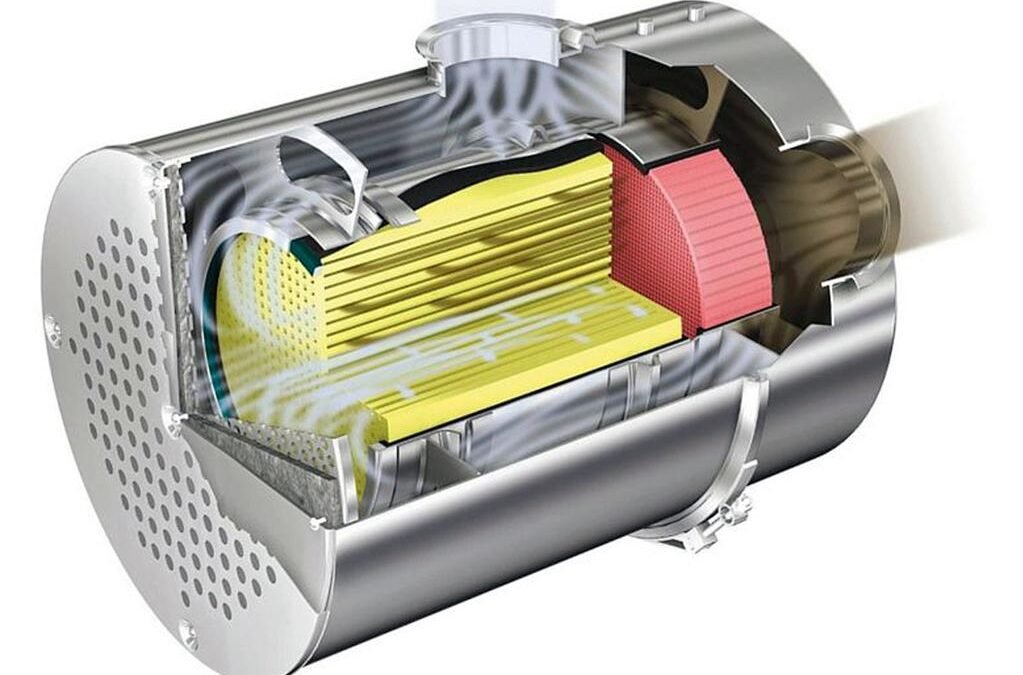
Modern diesel-powered equipment relies on sophisticated exhaust aftertreatment systems to meet increasingly stringent emissions regulations while maintaining engine performance and fuel efficiency. At the center of these systems is the Diesel Particulate Filter (DPF), which captures particulate matter before exhaust gases are released into the atmosphere. While the filter itself is a critical emissions-control component, the structural assembly supporting it—the DPF frame—is equally important to the reliability and longevity of the entire exhaust system.
A DPF frame is far more than a simple mounting bracket. It is an engineered structural assembly that supports the weight of the aftertreatment system, isolates vibration, accommodates thermal expansion, and transfers dynamic loads into the vehicle chassis or equipment frame. Whether installed on a Class 8 truck, construction machine, industrial generator, marine diesel engine, or mining equipment, the frame must perform reliably under continuous vibration, high temperatures, road shock, corrosion, and demanding operating conditions.
Designing an effective DPF frame requires balancing multiple engineering disciplines. Structural analysis, material selection, welding quality, fatigue resistance, manufacturability, corrosion protection, and maintenance accessibility all influence long-term performance. Engineers must also consider packaging constraints, serviceability, production efficiency, and compatibility with other aftertreatment components such as Diesel Oxidation Catalysts (DOC), Selective Catalytic Reduction (SCR) systems, DEF injectors, and exhaust sensors.
As diesel equipment manufacturers continue to optimize emissions systems, custom fabrication has become increasingly important. Precision laser cutting, CNC machining, sheet metal forming, robotic welding, and advanced finishing processes enable manufacturers to produce durable DPF frame assemblies that meet demanding OEM specifications while supporting efficient production.
This guide explains how DPF frames are designed, fabricated, mounted, and integrated into heavy-duty exhaust systems. It explores engineering principles, fabrication methods, vibration control strategies, material selection, and manufacturing best practices that contribute to dependable exhaust support systems across commercial and industrial applications.
What Is a DPF Frame?
A DPF frame is the structural mounting assembly that supports a diesel particulate filter and its associated aftertreatment components within a vehicle or industrial machine. Rather than allowing the exhaust piping to bear the full weight of these components, the frame transfers loads into the primary structure of the vehicle or equipment, helping maintain alignment and reducing stress throughout the exhaust system.
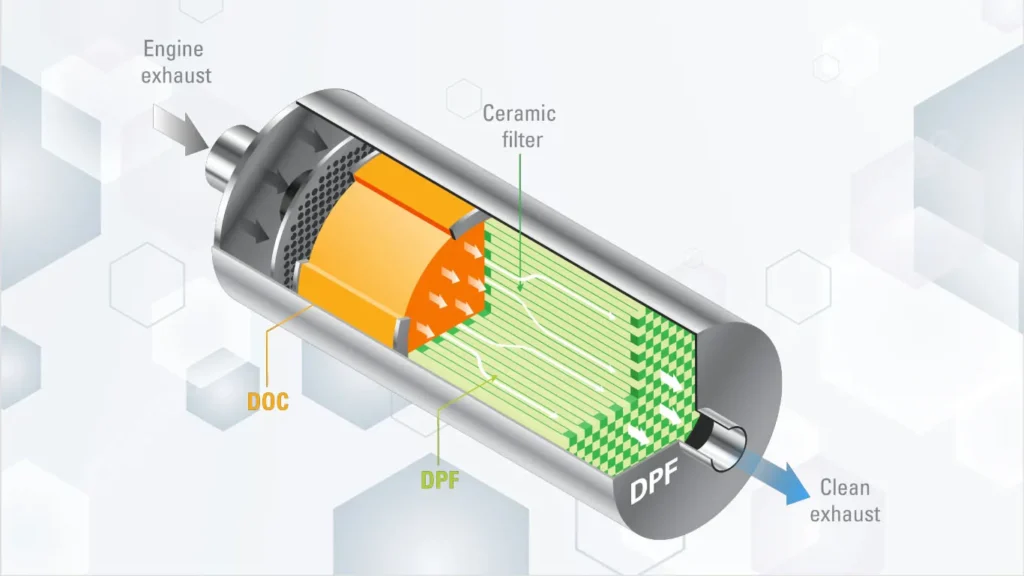
Modern diesel aftertreatment systems often combine multiple components into a single integrated package. These assemblies can include a Diesel Particulate Filter (DPF), Diesel Oxidation Catalyst (DOC), Selective Catalytic Reduction (SCR) unit, DEF dosing module, temperature sensors, NOx sensors, differential pressure sensors, heat shields, and connecting exhaust piping. Collectively, these components create significant structural loads that require carefully engineered support.
Role in Diesel Aftertreatment Systems
The primary function of a DPF frame is to provide stable structural support while accommodating the unique operating conditions of diesel exhaust systems. During normal operation, exhaust temperatures can vary dramatically as engines cycle through different load conditions and regeneration events. Simultaneously, the frame is subjected to continuous vibration, engine movement, acceleration forces, and environmental exposure.
A properly designed frame distributes these forces evenly throughout the supporting structure while protecting sensitive emissions-control components from excessive mechanical stress.
Relationship Between DPF, DOC, and SCR Components
Many modern diesel engines integrate the DPF with other aftertreatment devices into compact assemblies. The DOC typically oxidizes hydrocarbons and carbon monoxide before exhaust gases enter the particulate filter. Downstream, SCR systems reduce nitrogen oxide emissions through the controlled injection of Diesel Exhaust Fluid (DEF).
Because these components are physically connected, movement or failure within one support location can affect the alignment and performance of the entire aftertreatment system. The DPF frame therefore becomes a critical structural element that helps maintain system integrity.
Why Structural Support Matters
Without engineered support, heavy exhaust assemblies place excessive loads on piping, flexible connectors, sensors, and welded joints. Over time, repeated vibration and thermal cycling may contribute to:
- Fatigue cracking
- Weld failures
- Exhaust leaks
- Sensor damage
- Mounting misalignment
- Premature component replacement
- Increased maintenance costs
An engineered frame minimizes these risks while extending service life and improving reliability.
How DPF Frames Support Exhaust Aftertreatment Systems
Supporting a modern diesel aftertreatment system requires more than simply carrying weight. The frame must function as an integrated structural assembly that safely manages static loads, dynamic forces, thermal movement, and environmental exposure throughout the equipment’s operating life.
Load Transfer
One of the primary engineering objectives is transferring the weight of the aftertreatment system into the vehicle chassis or structural frame. Depending on the application, complete exhaust assemblies can weigh several hundred pounds once catalysts, particulate filters, mounting hardware, insulation, and protective shields are installed.
Rather than concentrating these loads at individual pipe connections, engineered mounting frames distribute forces across multiple attachment points. This reduces localized stress while improving long-term durability.
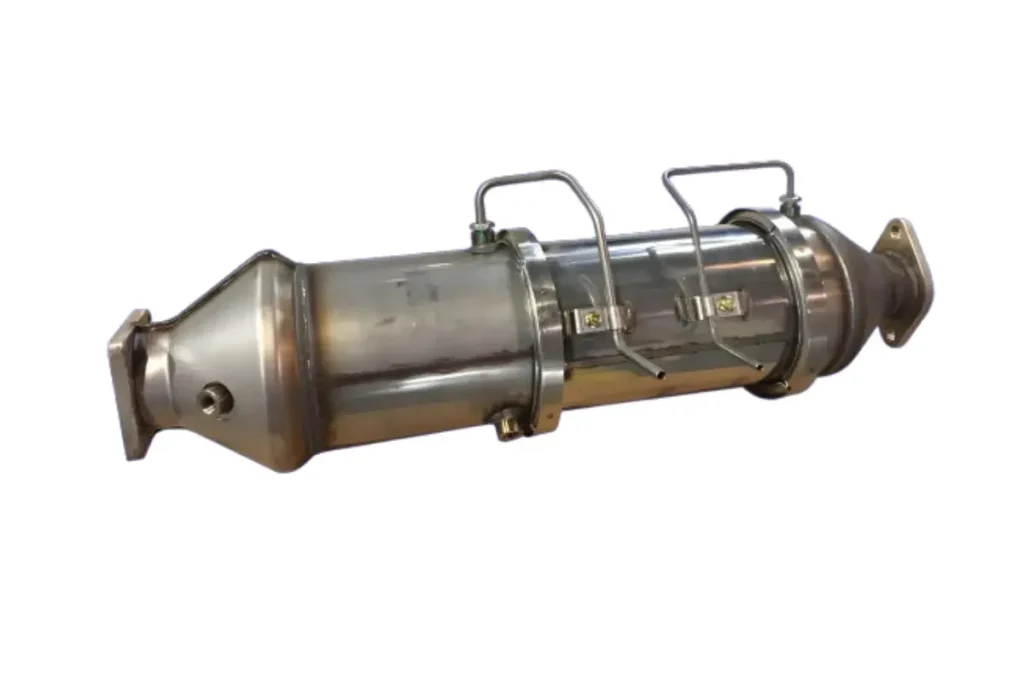
DPF Frames
Protecting Exhaust Components
The DPF contains ceramic filtering media that must remain structurally intact to perform efficiently. Excessive vibration or mounting distortion can introduce undesirable stresses into the filter housing, potentially shortening service life.
A properly engineered support frame helps maintain alignment while protecting:
- DPF housing
- DOC assemblies
- SCR modules
- DEF injectors
- Temperature probes
- Pressure sensors
- Exhaust clamps
- Heat shields
Maintaining proper alignment also simplifies servicing and replacement of emissions components.
Reducing Stress on Exhaust Piping
Exhaust piping is designed to transport gases—not support heavy structural loads. If inadequate support allows excessive movement, piping may experience bending stresses that contribute to fatigue failure or exhaust leaks.
Properly designed mounting systems work together with flexible exhaust connectors to isolate engine movement while limiting structural loading on the piping network.
Supporting Sensors and Accessories
Modern emissions systems incorporate numerous electronic sensors that monitor pressure, temperature, and emissions performance. Wiring harnesses, sensor ports, and auxiliary brackets all rely on stable mounting conditions to function correctly.
DPF frames therefore contribute not only to structural performance but also to the long-term reliability of electronic monitoring systems.
Engineering Design Considerations
Designing a durable DPF frame requires understanding the combined effects of structural loading, vibration, heat, manufacturing constraints, and long-term fatigue. Unlike many static support structures, DPF frames experience constantly changing operating conditions throughout their service life.
Static Loading
The starting point for structural design is determining the total supported weight. Engineers evaluate the mass of the DPF, DOC, SCR assembly, brackets, insulation, sensors, fasteners, and associated piping to calculate gravity loads.
Support members must provide sufficient stiffness without adding unnecessary weight or manufacturing complexity.
Dynamic Loading
Vehicle motion introduces dynamic loads significantly greater than simple static weight. Road irregularities, acceleration, braking, cornering, and off-road operation continuously cycle structural stresses throughout the mounting system.
Heavy construction equipment, agricultural machinery, and mining vehicles often experience particularly severe loading conditions, making fatigue resistance a primary design consideration.
Thermal Expansion
Exhaust systems routinely operate at temperatures exceeding several hundred degrees Fahrenheit, with regeneration cycles generating even higher thermal loads.
As temperatures change, both the exhaust components and supporting frame expand and contract. Restricting this natural movement can produce high stresses within welded joints, mounting brackets, and exhaust piping.
Engineers frequently incorporate slotted connections, flexible couplings, or carefully located mounting points that allow controlled movement while maintaining structural stability.
Fatigue Resistance
Fatigue is often the governing failure mode for DPF frames. Unlike overload failures, fatigue develops gradually through millions of repeated stress cycles.
Design strategies include:
- Eliminating sharp stress concentrations
- Using generous bend radii
- Adding reinforcement gussets
- Optimizing weld geometry
- Maintaining balanced load paths
- Minimizing unnecessary cantilever lengths
These measures significantly improve long-term durability.
Packaging Constraints
Space within heavy-duty vehicles is increasingly limited. Fuel tanks, suspension components, driveline systems, hydraulic lines, battery boxes, and aerodynamic body panels compete for available installation space.
DPF frame designers must create compact support assemblies that integrate efficiently without compromising accessibility or structural performance.
Service Accessibility
Maintenance requirements strongly influence frame design. Technicians require safe access for filter removal, sensor replacement, inspections, and cleaning operations.
Thoughtful engineering can reduce service time by incorporating removable brackets, accessible fasteners, and unobstructed maintenance clearances while preserving structural integrity.
Materials Used for DPF Frames
Material selection has a significant impact on frame strength, weight, corrosion resistance, manufacturing cost, and long-term durability. Engineers evaluate operating temperatures, environmental exposure, fabrication requirements, and expected service life before selecting the most appropriate material.
Carbon Steel
Carbon steel remains one of the most widely used materials for DPF frame fabrication because of its excellent structural properties, weldability, and cost-effectiveness. ASTM A36 steel is commonly specified for structural brackets, mounting plates, and welded support assemblies where high strength and reliable fabrication are required.
For heavy-duty commercial vehicles and industrial equipment operating in moderate environments, carbon steel provides an effective balance between performance and manufacturing cost.
High-Strength Low-Alloy (HSLA) Steel
Where weight reduction is a priority, HSLA steel offers higher strength than conventional carbon steel while allowing thinner sections without sacrificing structural performance. This makes it particularly attractive for OEM applications focused on reducing overall vehicle weight and improving fuel efficiency.
HSLA materials also provide enhanced fatigue performance, an important advantage for components subjected to continuous vibration and cyclic loading.
Stainless Steel
Stainless steel, particularly Grades 304 and 316, is commonly selected for corrosive environments such as marine applications, chemical processing facilities, municipal fleets operating in regions with road salt, and equipment exposed to moisture or aggressive cleaning agents.
Although stainless steel generally carries a higher material cost, its corrosion resistance and long service life often reduce maintenance requirements over the equipment’s lifecycle.
Aluminum
Aluminum alloys such as 5052 and 6061 offer significant weight savings while maintaining good corrosion resistance. Lightweight DPF frames can simplify installation and reduce structural loads on supporting components, making aluminum an attractive option for selected vehicle platforms.
However, aluminum’s lower modulus of elasticity requires careful engineering to maintain adequate stiffness under dynamic loading.
Corrosion-Resistant Coatings
Even durable base materials benefit from protective finishes. Powder coating, epoxy coatings, ceramic thermal coatings, and hot-dip galvanizing help shield fabricated components from corrosion, road debris, chemicals, and environmental exposure while improving long-term appearance and durability.
Fabrication Processes for DPF Frames
The performance of a DPF frame depends not only on its design but also on the quality and precision of the fabrication process. Modern manufacturing techniques allow engineers to produce highly repeatable components while maintaining tight tolerances, consistent weld quality, and efficient production schedules.
Laser Cutting
Laser cutting is widely used for precision fabrication of mounting plates, brackets, gussets, and structural components. High-powered laser systems provide exceptional dimensional accuracy while producing clean edges that minimize secondary finishing operations.
For custom DPF frame projects, laser cutting offers several advantages:
- Tight manufacturing tolerances
- Consistent part geometry
- Reduced material waste
- Fast prototype production
- Improved assembly fit-up
The ability to quickly modify digital designs also makes laser cutting valuable during product development and prototype validation.
Plasma Cutting
For thicker structural materials, plasma cutting remains an efficient and economical solution. Plasma systems can process carbon steel, stainless steel, and aluminum while maintaining good productivity for larger structural components.
Many heavy-duty exhaust support structures incorporate plasma-cut parts when material thickness exceeds the optimal range for laser processing.
CNC Machining
Certain DPF frame components require precision-machined features such as mounting surfaces, sensor interfaces, locating points, or specialized attachment hardware. CNC machining ensures dimensional accuracy and repeatability, particularly for OEM production programs where consistency is critical.
Machined features often improve assembly efficiency while reducing installation variability in the field.
Sheet Metal Forming
Many frame assemblies utilize formed sheet metal components rather than fully welded structures. Press brakes, roll-forming equipment, and stamping operations create bends, channels, reinforcement ribs, and structural profiles that increase stiffness while minimizing material usage.
Proper forming techniques also reduce the number of welded joints, which can improve fatigue resistance and simplify production.
Welding Processes
Welding is typically the primary assembly method for DPF frames. Depending on material selection and production volume, manufacturers may use:
- MIG welding
- TIG welding
- Robotic welding
- Manual welding
- Spot welding
The selected process must provide sufficient structural strength while maintaining dimensional stability throughout fabrication.
Surface Finishing
Following fabrication, finishing operations protect the frame from corrosion and environmental exposure. Powder coating, galvanizing, painting, passivation, and specialty coatings are commonly used to improve durability and appearance.
For OEM applications, finishing systems are often selected to match the expected operating environment and service life requirements.
Mounting Systems and Vibration Control
Vibration is one of the most significant factors affecting DPF frame durability. Diesel engines generate continuous vibration across a wide frequency range, while vehicle movement introduces additional shock and dynamic loading. Without proper isolation, these forces can contribute to fatigue cracking, component failures, and reduced service life.
Frame Mounting Brackets
Mounting brackets provide the primary connection between the DPF frame and the supporting structure. Their geometry must distribute loads effectively while accommodating manufacturing tolerances and operational movement.
Engineers typically avoid abrupt changes in section thickness and sharp geometric transitions that can create stress concentrations under cyclic loading.
Rubber Isolation Mounts
Rubber isolators are among the most common vibration control solutions used in exhaust support systems. Elastomeric mounts absorb vibration energy and reduce the transmission of dynamic loads between the engine, exhaust system, and vehicle structure.
Properly selected rubber mounts can significantly improve fatigue performance while protecting sensors and electronic components from excessive vibration.
Spring Isolators
In applications with larger dynamic movements, spring isolators may be used to support heavier assemblies while providing controlled flexibility. These systems allow movement in multiple directions while maintaining structural support.
Spring-based mounting systems are particularly valuable where large mass assemblies must be isolated from structural vibration.
Wire Rope Isolators
Wire rope isolators provide excellent durability in harsh environments where traditional elastomeric materials may degrade. These devices utilize stranded stainless-steel cables configured to absorb shock and vibration without relying on rubber components.
Applications involving extreme temperatures, marine environments, mining equipment, and defense systems frequently benefit from wire rope isolation technology.
Flexible Exhaust Connectors
Flexible exhaust connectors complement frame-mounted support systems by accommodating engine movement and thermal expansion. These components help prevent excessive stress from being transferred into exhaust piping or aftertreatment assemblies.
When combined with engineered support frames, flexible connectors contribute significantly to long-term system reliability.
Reducing Vibration-Induced Fatigue
Successful vibration control requires a systems-based approach rather than relying on a single component. Engineers typically evaluate:
- Natural frequencies
- Resonance risks
- Mounting locations
- Structural stiffness
- Component mass distribution
- Isolation effectiveness
By addressing vibration during the design phase, manufacturers can substantially improve equipment reliability while reducing maintenance costs.
Welding, Structural Integrity and Quality Assurance
Weld quality often determines the long-term performance of a DPF frame. Because these structures experience continuous cyclic loading, even minor weld defects can become initiation points for fatigue cracks over time.
MIG Welding
Metal Inert Gas (MIG) welding is commonly used for carbon steel and production fabrication due to its speed, efficiency, and repeatability. Automated MIG systems can produce high-quality welds with consistent penetration and minimal variability.
For high-volume manufacturing environments, robotic MIG welding improves productivity while maintaining quality standards.
TIG Welding
Tungsten Inert Gas (TIG) welding is often selected for stainless steel and aluminum components where precision and appearance are critical. TIG welding provides excellent control over heat input and weld quality, making it suitable for demanding applications.
Although generally slower than MIG welding, TIG welding offers superior precision for specialized fabrication projects.
AWS Welding Standards
Many manufacturers rely on recognized welding standards such as:
- AWS D1.1 Structural Welding Code – Steel
- AWS D1.6 Structural Welding Code – Stainless Steel
These standards establish requirements for welding procedures, welder qualifications, inspection methods, and quality control practices.
Following established welding codes helps ensure consistency and structural reliability.
Inspection Procedures
Quality assurance programs often include multiple inspection methods throughout fabrication. Common inspection activities include:
- Visual inspection
- Dimensional verification
- Weld quality evaluation
- Fit-up inspection
- Surface finish inspection
- Assembly verification
These procedures help identify potential issues before products enter service.
Production Quality Control
Beyond individual weld inspections, manufacturers implement broader quality systems to maintain consistency across production runs. ISO 9001 quality management principles, documented procedures, material traceability, and process controls all contribute to reliable manufacturing outcomes.
For OEM customers, consistent quality is often as important as the engineering design itself.
Corrosion Protection and High-Temperature Performance
DPF frames operate in environments that combine elevated temperatures, moisture, chemicals, road debris, and atmospheric contaminants. Protecting structural components from corrosion and heat-related degradation is therefore a critical aspect of engineering design.
Powder Coating
Powder coating provides a durable protective finish that resists chipping, abrasion, and environmental exposure. The process creates a uniform coating that enhances both appearance and corrosion resistance.
Powder-coated DPF frames are commonly used in commercial transportation and industrial equipment applications.
Galvanizing
Hot-dip galvanizing provides exceptional corrosion protection through a metallurgically bonded zinc coating. Galvanized components are particularly valuable in environments where moisture, road salts, and outdoor exposure create aggressive corrosion conditions.
Galvanizing is frequently used for structural steel components intended for extended service life.
Ceramic Coatings
High-temperature ceramic coatings help protect components exposed to extreme exhaust temperatures. These coatings can reduce heat transfer, improve thermal durability, and contribute to overall system performance.
In applications with frequent regeneration cycles, ceramic coatings may provide additional protection against thermal degradation.
Heat Shields
Heat shields are commonly integrated into DPF frame assemblies to protect surrounding components from radiant heat. Electrical wiring, hoses, sensors, fuel systems, and nearby structural members may all require thermal protection depending on the installation layout.
Proper heat shielding also improves technician safety during maintenance activities.
Thermal Management
Effective thermal management extends beyond simply protecting the frame itself. Engineers must evaluate:
- Exhaust temperatures
- Airflow patterns
- Heat dissipation
- Expansion characteristics
- Nearby component exposure
Balancing these factors helps maintain structural integrity while supporting reliable operation of the entire aftertreatment system.
Applications Across Heavy-Duty Industries
DPF frames are used across a wide range of industries where diesel engines remain essential for transportation, power generation, material handling, and industrial operations. Although operating environments vary significantly, the underlying engineering requirements remain consistent: reliable support, vibration resistance, durability, and serviceability.
Commercial Trucking
Class 8 trucks represent one of the largest applications for DPF frame systems. Long operating hours, continuous road vibration, and demanding maintenance schedules require support structures capable of delivering reliable performance over millions of miles.
Fleet operators place particular emphasis on durability, service access, and replacement part availability.
Construction Equipment
Excavators, loaders, bulldozers, and other construction machines operate in highly demanding environments characterized by shock loading, vibration, dust, and temperature extremes.
DPF frames for these applications must withstand severe operating conditions while minimizing downtime.
Mining Equipment
Mining operations expose equipment to some of the harshest environments encountered in industry. Heavy loads, continuous operation, abrasive contaminants, and extreme vibration place significant demands on structural support systems.
Robust frame construction and advanced vibration control are often essential.
Agricultural Machinery
Modern agricultural equipment relies on emissions-compliant diesel engines that must operate reliably through seasonal workloads. DPF frames support these systems while accommodating vibration, dirt, moisture, and prolonged field operation.
Industrial Generators
Stationary power generation equipment requires support structures capable of handling vibration and thermal cycling during extended operating periods. Reliability is particularly important in emergency backup power applications.
Marine Diesel Engines
Marine environments combine vibration, moisture, salt exposure, and corrosion risks. Stainless steel materials, specialized coatings, and advanced isolation systems are often used to improve durability in these applications.
Prototype Development and OEM Manufacturing
Developing a reliable DPF frame begins long before production. Manufacturers must validate structural performance, optimize fabrication methods, and ensure the design can be produced consistently at scale. Whether the application involves a new heavy-duty truck platform or a replacement frame for industrial equipment, prototype development is essential for minimizing risk and improving long-term product reliability.
Rapid Prototyping
Modern CAD software, CNC machining, and laser cutting technologies have significantly shortened prototype development cycles. Engineers can quickly transform digital models into physical assemblies for fitment verification, structural evaluation, and manufacturing reviews.
Rapid prototyping allows design teams to identify packaging conflicts, optimize bracket geometry, and refine mounting locations before committing to production tooling.
Design Validation
Prototype testing extends beyond checking whether components fit together. Validation typically includes evaluating:
- Structural stiffness
- Weld integrity
- Mounting alignment
- Vibration response
- Thermal movement
- Installation efficiency
- Maintenance accessibility
For OEM programs, testing may include simulated road conditions, vibration testing, and thermal cycling to confirm that the frame performs reliably under real operating environments.
Production Manufacturing
Transitioning from prototype to production requires repeatable manufacturing processes that maintain dimensional consistency across every assembly. Laser-cut components, CNC-machined features, robotic welding, and standardized inspection procedures help ensure every frame meets engineering specifications.
Production planning also considers material availability, manufacturing throughput, and quality assurance processes to reduce lead times while maintaining product quality.
Replacement Components
Many fleets and equipment owners require replacement DPF frames after years of service or following damage from corrosion, impact, or fatigue. Reverse engineering and precision measurement techniques enable manufacturers to produce replacement assemblies that match original equipment while incorporating improvements in materials or fabrication methods where appropriate.
Design for Manufacturing (DFM)
A successful DPF frame balances engineering performance with production efficiency. Design-for-Manufacturing principles help reduce unnecessary complexity by minimizing welds, simplifying part geometry, standardizing fasteners, and improving assembly access.
The result is a product that is easier to fabricate, inspect, install, and maintain without compromising structural integrity.
Engineering Services That Improve DPF Frame Performance
While high-quality fabrication is essential, engineering support throughout the design process often determines the long-term success of a DPF frame. Integrating engineering analysis with manufacturing expertise helps optimize structural performance, simplify production, and reduce lifecycle costs.
Structural Analysis
Structural analysis evaluates how a DPF frame responds to static loads, dynamic forces, and thermal expansion throughout its operating life. Engineers assess load paths, stress concentrations, and potential fatigue locations to ensure the frame can withstand demanding service conditions.
Finite Element Analysis (FEA) is commonly used during product development to compare design alternatives and improve structural efficiency before fabrication begins.
CAD Modeling
Three-dimensional CAD modeling enables engineers to develop highly detailed digital representations of the frame and its surrounding components. Accurate modeling improves communication between design, fabrication, and installation teams while supporting interference checks and assembly planning.
Digital models also simplify design revisions and accelerate prototype development.
Prototype Optimization
Engineering rarely ends after the first prototype. Test results often identify opportunities to improve stiffness, reduce weight, simplify fabrication, or enhance serviceability.
Iterative refinement helps achieve an optimal balance between structural performance, manufacturability, and cost.
Fabrication Drawings
Detailed fabrication drawings communicate every aspect of the design to the manufacturing team. They include material specifications, weld symbols, dimensional tolerances, surface finishes, and inspection requirements, ensuring consistent production quality.
Well-prepared drawings also reduce manufacturing errors and improve assembly efficiency.
Production Support
Engineering teams frequently continue supporting products after production begins. Assistance may include troubleshooting manufacturing issues, implementing design revisions, improving production methods, or developing custom solutions for unique customer applications.
Companies such as The Sigma Source combine engineering services with precision metal fabrication, allowing design, manufacturing, and quality control teams to collaborate throughout the project lifecycle. This integrated approach helps improve communication, reduce production delays, and deliver fabricated support structures that meet demanding industrial performance requirements.
Choosing the Right DPF Frame Fabrication Partner
Selecting a fabrication partner involves more than comparing pricing or manufacturing capacity. For critical exhaust support structures, engineering capability, quality systems, and long-term manufacturing support are equally important considerations.
A qualified fabrication partner should demonstrate experience designing and manufacturing structural assemblies that withstand vibration, thermal cycling, and demanding operating conditions. Engineering expertise is particularly valuable during early project stages, when design improvements can significantly influence performance, manufacturability, and lifecycle costs.
Manufacturing capability should include advanced fabrication technologies such as precision laser cutting, CNC machining, sheet metal forming, certified welding, and protective finishing processes. These capabilities help ensure consistent quality from prototype development through full-scale production.
Quality assurance is another critical factor. Manufacturers should maintain documented inspection procedures, material traceability, dimensional verification processes, and welding quality controls aligned with recognized industry standards such as AWS D1.1 or AWS D1.6 where applicable. ISO 9001 quality management practices further support consistent manufacturing outcomes and continuous process improvement.
For OEM customers, scalability is equally important. The ability to transition efficiently from prototype quantities to large production runs helps reduce lead times and maintain product consistency as demand increases.
Finally, successful fabrication partnerships extend beyond manufacturing. Ongoing engineering support, design refinement, production optimization, and responsive technical communication contribute to long-term project success and reduced total ownership costs.
Organizations seeking custom DPF frame solutions often benefit from working with engineering-driven manufacturers capable of supporting the complete process—from concept development and CAD modeling through fabrication, finishing, inspection, and production manufacturing.
Conclusion
Although the Diesel Particulate Filter is the most visible component of a diesel aftertreatment system, its long-term performance depends heavily on the structural integrity of the supporting frame. A well-engineered DPF frame protects critical emissions-control components by managing static loads, isolating vibration, accommodating thermal expansion, and maintaining proper alignment throughout years of demanding service.
Successful frame design combines structural engineering, material science, precision fabrication, and manufacturing expertise. Material selection, weld quality, corrosion protection, vibration isolation, and thoughtful packaging all contribute to durability and lifecycle performance. Modern manufacturing technologies—including laser cutting, CNC machining, robotic welding, and advanced surface finishing—allow manufacturers to produce highly consistent assemblies capable of meeting demanding OEM and industrial requirements.
Whether supporting heavy-duty trucks, construction equipment, mining machinery, industrial generators, or marine diesel engines, DPF frames must withstand some of the harshest operating conditions found in modern engineering. Investing in sound engineering practices during the design and fabrication stages helps reduce maintenance costs, improve reliability, simplify servicing, and extend equipment life.
For organizations requiring custom exhaust support structures, partnering with an experienced engineering and fabrication company provides advantages that extend well beyond manufacturing alone. Integrated engineering analysis, precision fabrication, prototype development, and quality assurance help ensure every frame is designed to perform reliably in real-world operating environments while supporting efficient production and long-term serviceability.
Frequently Asked Questions
What is a DPF frame used for?
A DPF frame is a structural support assembly that securely mounts the Diesel Particulate Filter (DPF) and associated aftertreatment components to a vehicle chassis or equipment frame. It transfers loads away from exhaust piping, maintains component alignment, and protects the emissions system from vibration, shock, and thermal movement.
Why is a DPF frame important in diesel exhaust systems?
Without adequate structural support, the weight and movement of the aftertreatment system can place excessive stress on exhaust pipes, welds, sensors, and flexible connectors. A properly engineered frame improves durability, reduces fatigue-related failures, and supports reliable emissions system performance.
What materials are commonly used to manufacture DPF frames?
Common materials include carbon steel, HSLA steel, stainless steel (304 and 316), and aluminum alloys such as 5052 and 6061. Material selection depends on operating temperatures, corrosion exposure, weight requirements, fabrication methods, and expected service life.
How are DPF frames designed to withstand vibration?
Engineers minimize vibration-related failures by optimizing load paths, eliminating stress concentrations, incorporating reinforcement where needed, and using vibration isolation devices such as rubber mounts, spring isolators, or wire rope isolators. Flexible exhaust connectors also help reduce the transfer of engine movement into the frame.
Why is thermal expansion important when designing DPF mounting systems?
DPF assemblies experience significant temperature changes during operation and regeneration cycles. If thermal expansion is overly restricted, excessive stresses may develop within the frame, mounting hardware, or exhaust piping. Proper engineering allows controlled movement while maintaining structural stability.
What welding processes are used to fabricate DPF frames?
MIG welding is commonly used for production fabrication of carbon steel assemblies because of its speed and efficiency. TIG welding is often preferred for stainless steel and aluminum components where precision and appearance are important. Robotic welding is also widely used in OEM manufacturing for repeatability and consistent quality.
Can DPF frames be custom fabricated for OEM applications?
Yes. Many OEMs require custom-designed frames tailored to unique packaging constraints, weight targets, service requirements, and production methods. Engineering teams typically develop CAD models, fabricate prototypes, validate performance, and refine the design before full-scale manufacturing begins.
How does corrosion protection extend DPF frame service life?
Protective finishes such as powder coating, hot-dip galvanizing, epoxy coatings, and ceramic thermal coatings help shield fabricated components from moisture, road salts, chemicals, and environmental contaminants. Proper corrosion protection reduces maintenance requirements and extends the useful life of the frame.
What industries commonly use custom DPF frames?
Custom DPF frames are widely used in commercial trucking, construction equipment, mining, agriculture, marine applications, power generation, municipal fleets, rail transportation, oil and gas operations, and industrial manufacturing where diesel-powered equipment requires durable exhaust support systems.
What quality standards apply to DPF frame fabrication?
Depending on the application, fabrication may follow standards such as AWS D1.1 for structural steel welding, AWS D1.6 for stainless steel welding, ASTM material specifications, ISO 9001 quality management practices, OEM engineering requirements, and applicable EPA and CARB emissions-related guidelines for aftertreatment systems.
How does CAD modeling improve DPF frame design?
Three-dimensional CAD modeling enables engineers to verify clearances, identify potential interferences, optimize structural geometry, and improve communication between engineering and manufacturing teams. Digital models also accelerate prototype development and simplify future design revisions.
What should engineers consider when selecting a DPF frame manufacturer?
Key evaluation factors include engineering expertise, custom fabrication capabilities, welding quality, manufacturing technologies, material options, prototype support, quality assurance systems, inspection procedures, production scalability, and the ability to provide ongoing engineering assistance throughout the product lifecycle. A manufacturer with integrated engineering and fabrication capabilities can often streamline development, improve product quality, and reduce overall project timelines.